
Maximizing ROI with China Dip Tube Machine Service and Smart Integration
Oct 22, 2026
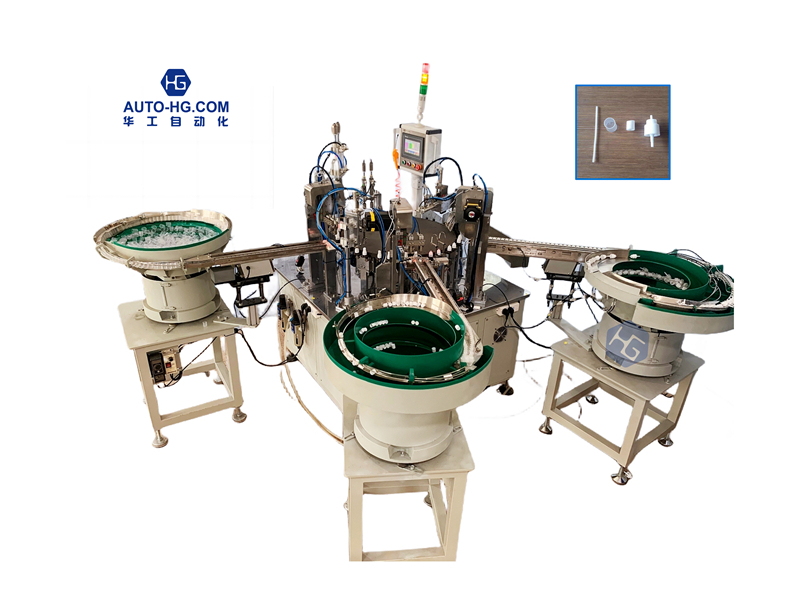
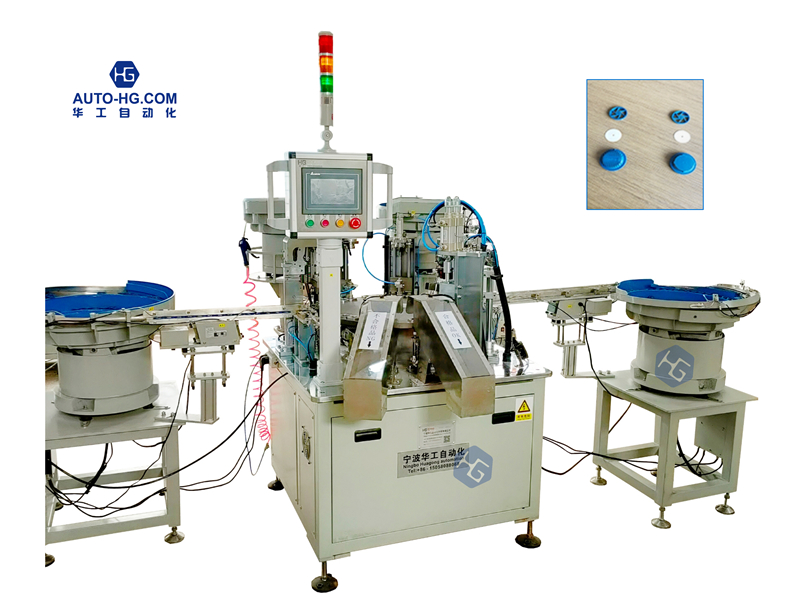
Yuyao, Zhejiang Oct 22, 2026 (Issuewire.com) - Dip tube insertion is often treated as a minor step in the pump assembly process. In reality, this seemingly simple operation carries significant financial risk when manufacturers rely on manual labor or outdated semi-automatic equipment. As global demand for liquid dispensing products grows, more production managers are turning to China Dip Tube Machine Service (https://www.hgautomachine.com/automatic-cover-pump-body-and-dip-tube-assembler-product/) specialists to close this operational gap. Inconsistent tube placement, missing components, and undetected assembly defects trigger downstream quality failures. These failures translate directly into higher scrap rates, rework cycles, and costly product holds -- losses that rarely appear clearly in a basic procurement budget. Beyond defect-related costs, labor dependency at this stage creates a structural vulnerability. Rising wages, high operator turnover, and growing difficulty recruiting assembly line workers continue to compress production margins across the cosmetics, daily chemical, and disinfectant industries. A single shift of manual tube insertion may appear affordable in isolation. However, the cumulative cost across a full production year frequently surprises operations managers who run a proper audit. How to Build a ROI Framework Before You Buy Evaluating a dip tube machine purely on purchase price leads to poor investment decisions. A more reliable approach involves examining Total Cost of Ownership rather than the sticker price alone. Start by calculating the current annual cost dedicated to tube insertion -- covering wages, training time, supervision overhead, and turnover-related rehiring expenses. A typical 2-shift manual tube insertion station with two operators generates roughly 80,000 to 120,000 yuan in annual labor cost depending on region, before accounting for turnover. Next, estimate scrap and rework value from inconsistent manual assembly; on high-volume lines, even a 1% defect rate across 5 million units annually represents a significant material loss. Add unplanned downtime cost: on a packaging line producing 100 pieces per minute, each hour of stoppage translates to approximately 6,000 missed units. Against this baseline, a fully automatic dip tube machine running at 90 to 120 pieces per minute with a single operator presents a concrete and calculable payback timeline. The numbers shift considerably when one operator can manage three machines simultaneously, fundamentally changing the labor-to-output ratio. Machine Specifications That Actually Move the Needle Not all automation equipment delivers equal financial impact. The technical specifications of a dip tube machine determine how directly it converts into measurable gains on the production floor. The Fully Automatic Tube Insertion Machine for Emulsion Pumps (https://www.hgautomachine.com/fully-automatic-tube-insertion-machine-for-emulsion-pumps-product/) from Ningbo Huagong Automation Technology Co., Ltd. offers a practical benchmark. This rotary pneumatic system handles dip tubes up to 250mm in length and runs at 90 to 120 pieces per minute. Its touch-screen interface supports fast parameter adjustments, enabling quick changeovers between product specifications without extended downtime. One operator runs the machine while it maintains a yield rate above 99%. It also passed a continuous 72-hour production pressure test, which gives procurement teams a documented reliability reference. Each of these figures maps to a specific cost line in a manufacturing P&L. The Automatic Cover Pump Body and Dip Tube Assembler handles the final assembly stage by integrating the transparent cover, pump body, and dip tube at 60 to 80 units per minute. Automatic presence detection flags and removes any incomplete assembly before it reaches packaging -- a built-in quality gate that replaces manual inspection at this step and reduces downstream rejection risk substantially. Smart Integration -- Connecting the Dip Tube Step to Your Full Production Line A dip tube machine running in isolation delivers only partial value. The larger ROI opportunity lies in connecting it to the rest of the pump assembly process. Huagong Automation designs its equipment as part of a modular production ecosystem. The spray pump assembly line covers piston assembly, nozzle disc insertion, gasket assembly, automated quality inspection, and final tube and cover assembly as sequential, interoperable stages. When each machine communicates efficiently with the next -- sharing cycle times, rejection signals, and throughput targets -- the entire line operates with fewer gaps and less material waste. This integration approach also simplifies plant management. Instead of coordinating multiple vendors with different technical standards, a single-source modular line streamlines maintenance scheduling, spare parts sourcing, and operator training. The compound productivity benefit becomes a meaningful competitive advantage as order volumes grow. The Service Layer: Where Long-Term ROI Is Won or Lost Equipment performance at installation is only the starting point. The service infrastructure behind a machine determines whether that performance holds over years, not just months. Huagong Automation structures its after-sales support around minimizing downtime exposure. The company commits to a 2-hour response time on support calls. When phone resolution falls short, qualified engineers go on-site immediately. Core components -- including PLC systems and servo motors -- carry a two-year warranty, while the complete machine is covered for one year, excluding standard consumable items. Spare parts ship via EMC express to minimize waiting time. Free installation commissioning and operator training come standard, and ongoing contact between after-sales staff and equipment managers supports daily maintenance routines. This structured support model shifts the post-purchase relationship from reactive troubleshooting toward proactive performance management -- a distinction that significantly affects long-term equipment uptime and production costs. 5 Questions to Ask Any Dip Tube Machine Supplier Before Signing Procurement decisions for automation equipment carry long-term consequences. These five questions help manufacturers evaluate suppliers rigorously before committing. First, does the supplier hold ISO 9001 and CE certification -- and does the certification cover dip tube and emulsion pump assembly equipment specifically, not just the company entity? Verify the certificate scope, not just its existence. Second, can the supplier deliver non-standard customization with free sample testing? Standard catalog machines may not fit every production specification, so genuine engineering capability -- including pre-sales technical consultation and custom solution design -- matters. Third, what is the supplier's track record for international delivery and on-site commissioning? Fourth, how does the supplier handle after-sales support for overseas clients across time zones? A 2-hour response guarantee only creates value when the support team is technically capable and reliably reachable. Fifth, has the supplier served clients with rigorous quality requirements? Equipment that meets demanding industrial standards signals a precision and reliability level that general-purpose machine builders often cannot match. Why Partnering with a China-Based Smart Factory Specialist Redefines Value China-sourced automation equipment carries persistent misconceptions about quality. The operational reality for established, certified manufacturers tells a different story. Founded in 2014 and headquartered in Ningbo, Zhejiang, Huagong Automation (https://www.hgautomachine.com/about-us/) has built its track record through sustained R&D investment, earning High-Tech Enterprise certification in 2024 and holding patents across multiple product lines. Its equipment has been delivered and commissioned across Europe, the Americas, Southeast Asia, and the Middle East. ISO 9001 and EU CE certifications are maintained as operational standards, and the company's client base includes brands with strict engineering requirements across daily chemical, automotive, and electronics sectors. For manufacturers assessing global sourcing options, a China-based specialist with this credential profile offers a compelling combination: engineering-grade equipment, modular integration capability, and a fully supported service model -- at a price point that makes the ROI timeline genuinely achievable rather than aspirational. To request a custom solution consultation or explore the full product range, visit https://www.hgautomachine.com/.
Source :Ningbo Huagong Automation Technology Co., Ltd.
This article was originally published by IssueWire. Read the original article here.
More News

Noel Gallagher credits 'compromising' with brother Liam for making Oasis' reunion work
Noel Gallagher opening up about mending fences in his relationship with Liam in a rare interview on one of the last episodes of Youtuber’s Amelia Dimoldenberg’s Chicken Shop Dates.

Prince WIlliam reveals the surprising jobs he fantasised as a child
William, Prince of Wales, revealed his sights set on two other jobs during Friday night's (23.10.26's) episode of The Graham Norton Show.

Hilary Swank reveals how she kept pregnancy a secret
Hollywood actress Hilary Swank has explained how she kept her pregnancy a secret until she reached her third trimester - crediting the "respectful" residents of the small town she lives in with helping her keep the news quiet until she wanted to announce it herself.

Sylvester Stallone reveals how he spent his movie millions
Hollywood action man Sylvester Stallone has revealed his biggest pay days have come from his art collection instead of his movie career - admitting he owns several paintings which are worth around $40 million and he's made a fortune from selling his pieces on.

Ryan Gosling confirms his music comeback 17 years after haunting rock band's debut album
Ryan Gosling has been seen singing on tracks like I'm Just Ken more recently, but now he's ready to go back to his musical roots.

Meghan Markle breaks her silence after father Thomas Markle hit with child abuse material allegations
Meghan, Duchess of Sussex has broken her silence after her estranged father Thomas Markle was hit with ‘disturbing’ allegations that he possessed child abuse material at his former home.

Daisy Edgar-Jones reveals her dad has huge TV connection and the vital words of wisdom he gave her
Normal People star Daisy Edgar-Jones has revealed the grounding "words of wisdom" her father, Big Brother co-creator Philip Edgar-Jones, gave her before she achieved fame.

Jenna Ortega felt 'very stressed out' when she 'wasn't connecting' with top Hollywood director
Wednesday star Jenna Ortega was initially "very stressed out" when she struggled to connect with director Tim Burton on the set of the Netflix show, but they eventually formed a strong working relationship.

James McAvoy explains why he quit alcohol
X-Men star James McAvoy has revealed he quit alcohol after he started drinking too much during the COVID-19 lockdowns.

Hunt for the next James Bond said to be in final stages
Actors in the running will reportedly screen test for the role this weekend.

Travis Knight refuses to embrace AI in film 'at all': 'The concern is when it supplants the artist'
Director Travis Knight has expressed his opposition to generative AI in filmmaking, asserting that computers cannot "supplant" human artists.

Louis Partridge set for Enola Holmes reunion on new indie movie
Louis Partridge will star in and produce the coming-of-age indie movie One Last Summer, joining forces with writer-director Misha Citron, who was a production assistant on Enola Holmes, to tell a poignant story set in Tuscany, Italy.
YOUR NEWS, OUR NETWORK.
Do you have Great News you want to tell the world?
Be it updates about your business or your community, you can make sure that it’s heard by submitting your story to our network reaching hundreds of news sites across 6 verticals.