
How to Develop Custom Private Label Products in China: From Product Concept to Mass Production
Nov 10, 2026
Ningbo, Zhejiang Nov 10, 2026 (Issuewire.com) - Developing a private label product in China involves much more than finding a factory and placing an order. A successful project usually requires product design, prototyping, engineering review, tooling, quality control, packaging, and production management.
For brands developing lifestyle products such as kitchenware, home storage, or personal care products, understanding the development process before production begins can help reduce design changes, tooling risks, quality problems, and delays.
So, what does the typical OEM/ODM product development process look like?
1. Define the Product Concept and Market Requirements
Every successful custom product starts with a clear product concept.
Before contacting suppliers, buyers should define the intended market, target customer, product function, approximate price range, materials, dimensions, and appearance. Market requirements can also influence details such as product capacity, handle size, colors, finishes, and packaging.
For products intended for international markets, these requirements may differ from those of products designed for the domestic market. Ergonomics, for example, can affect the dimensions and grip design of kitchen tools, cleaning products, and other handheld consumer goods.
A clear product brief gives designers and engineers a practical starting point and reduces unnecessary revisions later in the development process.
2. Develop the Product Design and 3D Model
Once the concept is defined, the next step is to turn the idea into a manufacturable design.
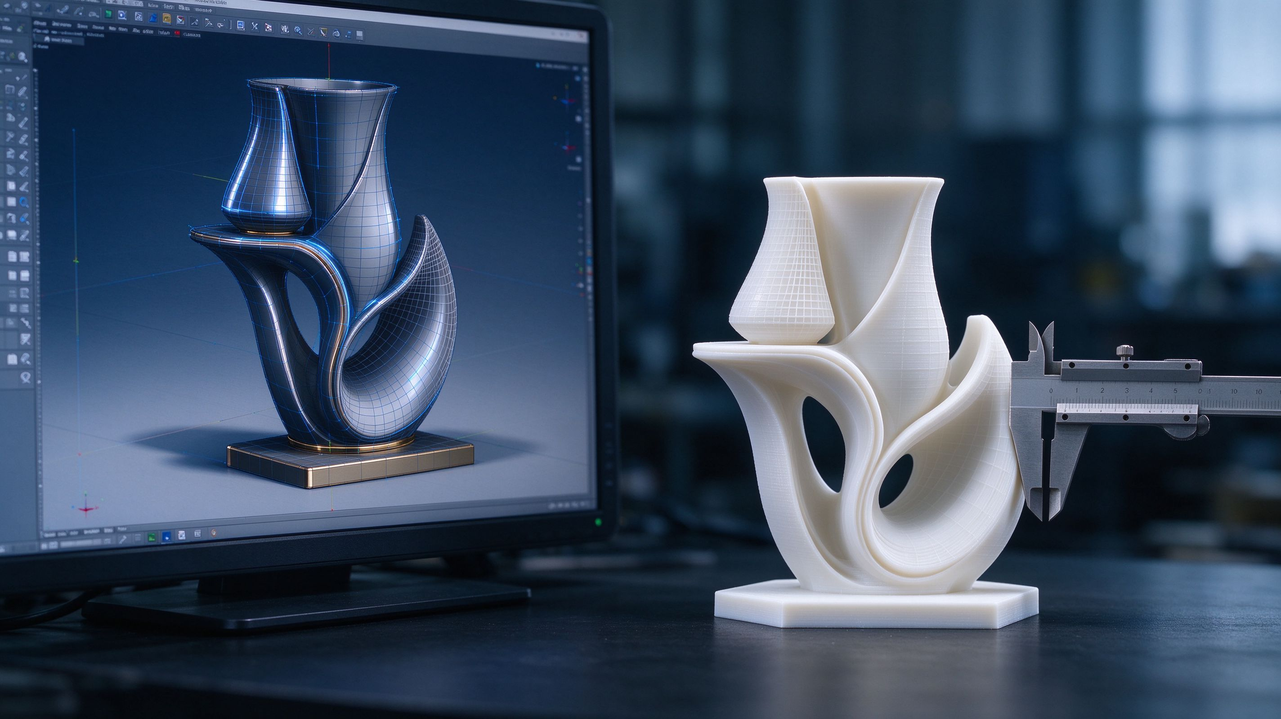
Design teams may begin with sketches, reference products, physical samples, or digital renderings. These concepts can then be developed into detailed 3D models that define the product's dimensions, components, materials, and assembly structure.
At this stage, designers should consider both appearance and manufacturability.
For example, wall thickness, snap-fit structures, draft angles, component connections, and surface finishes can all affect how easily a product can be manufactured. A design that looks good on screen may still require significant modification before it can be produced efficiently.
For brands developing products for different markets, ergonomic adjustments may also be necessary. Handle dimensions, grip spans, button positions, and operating angles can be reviewed before physical prototypes are produced.
3. Build and Test Functional Prototypes
A digital model is not enough to determine whether a product will work as intended.
Functional prototyping allows buyers and engineering teams to evaluate dimensions, mechanical movement, grip, fit, appearance, and usability before investing in production tooling.
Depending on the product, prototypes can be produced using technologies such as 3D printing, selective laser sintering, vacuum casting, or CNC machining.
For some custom lifestyle products, functional prototypes can be developed within 7-10 days. The exact development time depends on the product structure and project requirements.
Physical testing is particularly important for variables that are difficult to evaluate digitally, such as tactile feel, surface texture, grip comfort, cosmetic appearance, and the interaction between different components.
Testing these details before tooling can prevent costly changes later.
4. Conduct a DFM and Tooling Review
Before a production mold is manufactured, the product design should go through a Design for Manufacturing (DFM) review.
DFM examines whether the design can be manufactured consistently and efficiently at production scale.
Typical considerations include:
Wall thickness and transitions
Draft angles
Injection flow
Gating locations
Cooling channels
Parting lines
Undercuts
Snap-fit tolerances
Component consolidation
For injection-molded products, these details can have a direct impact on tooling cost, production efficiency, product appearance, and dimensional consistency.
A DFM review is therefore more than a technical formality. It is an opportunity to identify potential manufacturing problems before steel is cut.
For example, simplifying unnecessary undercuts or combining components where appropriate can reduce tooling complexity and maintenance requirements.
5. Test the Mold and First Production Samples
After the product design and tooling have been approved, the mold can be manufactured and tested.
Initial trial runs allow engineers to evaluate factors such as mold temperature, injection pressure, cycle time, dimensional accuracy, and surface quality.
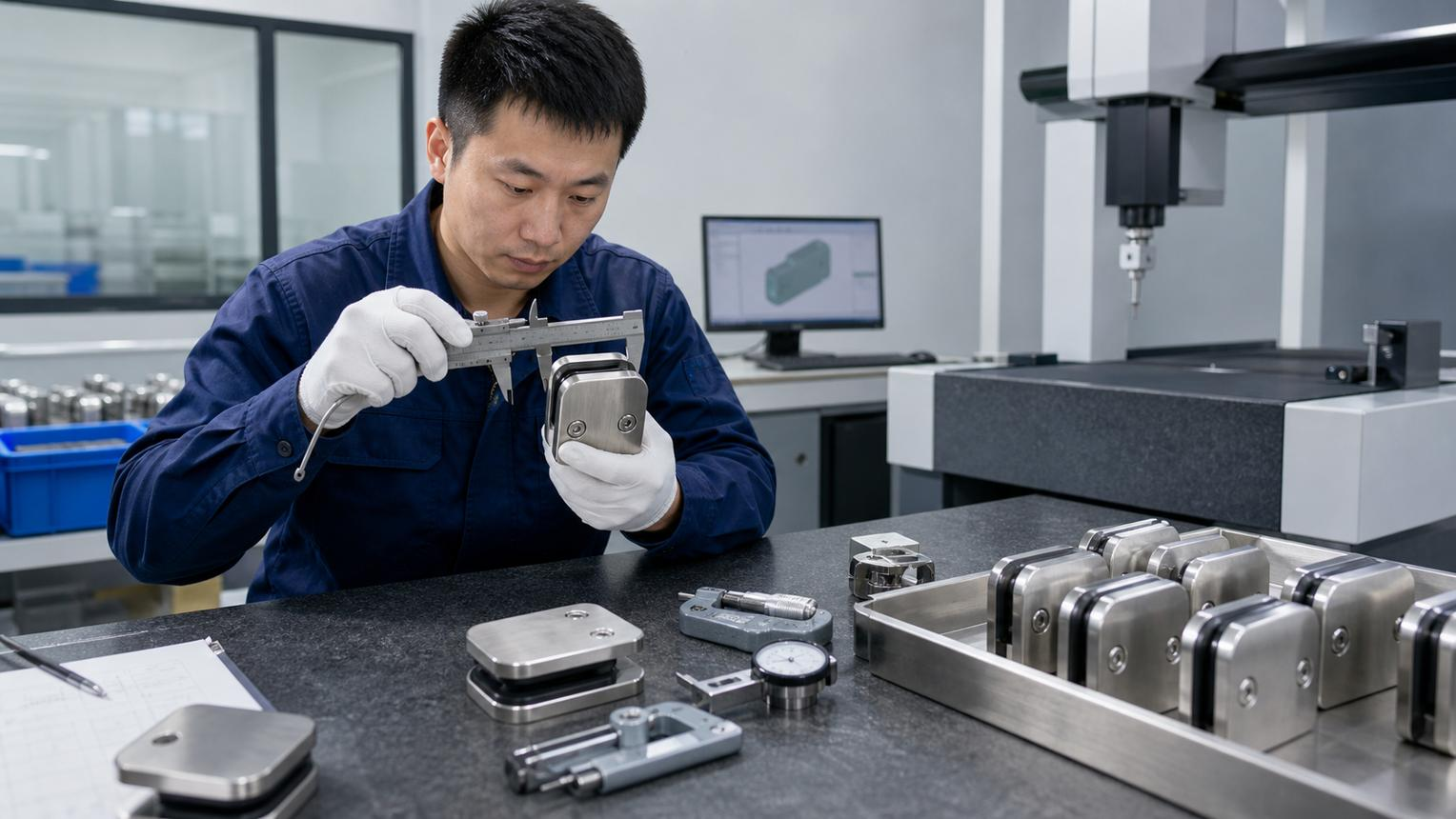
First-article inspections can then be used to compare production samples against approved engineering drawings and critical-to-quality dimensions.
If problems are discovered during these trials, adjustments can be made before the project moves into full-scale production.
This stage is especially important for private label products because a design may be approved visually while still having functional or dimensional issues that only become apparent during actual manufacturing.
6. Manage Mass Production and Quality Control
Once the tooling and samples have been approved, the project can move into mass production.
Quality control should not begin only when the finished goods are ready to ship. A structured process can include incoming quality control, during-production inspections, and final random inspections.
During production, inspectors can monitor product consistency while manufacturing is underway. This makes it possible to identify problems before an entire production run is completed.
Final inspections can evaluate factors such as:
Product dimensions
Appearance and finish
Functional performance
Drop resistance
Packaging condition
Quantity and labeling
For projects using AQL sampling, AQL Level II can be applied as part of the final random inspection process, with Major 2.5 and Minor 4.0 sampling levels used in the referenced production workflow.
The specific inspection requirements should always be agreed upon according to the buyer's product specifications and quality standards.
7. Develop Packaging and Compliance Documentation
Packaging should also be considered as part of product development rather than treated as an afterthought.
Private label products may require custom display boxes, inner trays, master cartons, labels, and other packaging components. Packaging should protect the product during transportation while also meeting the brand's retail requirements.
For products sold in international markets, buyers may also need relevant regulatory and compliance documentation.
Depending on the product and destination market, documentation may include requirements related to FDA 21 CFR, LFGB, CE, RoHS, or REACH. The applicable requirements depend on the product category and target market, so buyers should confirm them before production begins.
How Long Does Private Label Product Development Take?
The development timeline varies depending on product complexity, tooling requirements, testing, and production volume.
For some lifestyle products, functional prototypes can be developed within 7-10 days. A broader development roadmap may take around 90 days from initial concept through tooling and mass production, depending on the project.
The most important point is that product development should be treated as a series of stages rather than a single factory order.
Concept definition, design, prototyping, DFM, toolin, sample approval, quality control, and production each require their own review points.
What Is the Difference Between OEM and ODM?
OEM and ODM are both commonly used for private label product development, but they generally involve different starting points.
With OEM development, the buyer typically provides a more defined product concept, design, specifications, or existing product requirements, while the manufacturing partner helps turn those requirements into a production-ready product.
ODM generally involves greater support from the supplier or development partner in product design, engineering, and customization.
For brands without an internal product development team, an ODM partner can provide additional support during concept development and engineering. For brands with established designs, an OEM model may be more appropriate.
The right approach depends on how much of the product design and development the buyer wants to control internally.
What Should Buyers Check Before Mass Production?
Before approving mass production, buyers should confirm several key areas:
1. The final product dimensions and specifications
2. Prototype performance and functionality
3. Approved materials and finishes
4. Tooling and mold quality
5. Critical-to-quality dimensions
6. Packaging specifications
7. Required quality inspection standards
8. Applicable compliance documentation
A clear approval process helps prevent disagreements between buyers, designers, engineers, and manufacturers once production has started.
Working With an OEM/ODM Product Development Partner
Developing a custom private label product can require coordination between designers, engineers, tooling suppliers, manufacturers, quality inspectors, and packaging teams.
For companies that do not have these resources in-house, working with an experienced OEM/ODM development partner can simplify project management.
Union Source https://www.unionsourceb2b.com/, established in 2005, provides OEM and ODM product development services for lifestyle consumer goods, including kitchenware, home decor, personal care products, small appliances, festive supplies, party supplies, underwear, etc. Its development workflow includes product design, 3D modeling, functional prototyping, DFM review, tooling, production quality control, and packaging integration.
The company states that its development team includes industrial designers and tooling engineers, with functional prototypes available in 7-10 days for applicable projects and a broader production roadmap of approximately 90 days depending on project requirements.
For brands planning a custom product from concept through mass production, the key is not simply finding a factory. It is building a development process in which design, engineering, quality, tooling, and production are reviewed at the right stages.
Media Contact
Union Source Co., Ltd.
+86 13967800390
21F, NO. 288 Guanghua RD. Ningbo National Hi-Tech Zone, Ningbo, China 315048
Source :Union Source Co., Ltd.
This article was originally published by IssueWire. Read the original article here.
More News

Johnny Depp 'owes' his fans: 'They supported me through thick and thin'
Johnny Depp has voiced his gratitude for his fans as he appeared at the London premiere of Ebenezer.

John Cena disappearing from limelight before Christmas: 'I am a ghost'
WWE legend and Hollywood star John Cena has revealed you won't be able to see him until after the festive season.

Danielle Fishel 'made people uncomfortable' with her boundaries on Girl Meets World
Girl Meets World star Danielle Fishel has opened up about the boundaries she set during filming for the Disney spinoff.

Beloved Kiwi TV star and comedian Dai Henwood dies aged 48 after prolonged battle with bowel cancer
‘After decades of entertaining us on both stage and screen, he then shared his vulnerability during his cancer diagnosis. He made so many people proud.’

Baby You're A Rich Man: McCartney becomes a billionaire
Beatles legend Paul McCartney has a net worth of over a $US1 billion, Forbes estimates.

Dana White has blunt response after Donald Trump insists White House 'offer' was a joke
Dana White has opened up about his political goals after Donald Trump appeared to offer him the White House press secretary job before claiming it was a joke.

Gwyneth Paltrow wants to help with everything from perimenopause to 'best steak frites in Paris'
Gwyneth Paltrow is bringing Goop to Netflix and Spotify as a new video podcast series intended to feel "like you're sitting around" her kitchen table.

Dustin Hoffman threatened at gunpoint by husband of woman he was having affair with
Dustin Hoffman has recalled the awkward moment the husband of the woman he was sleeping with confronted him with a gun.

Toukie Smith, model and Robert De Niro's ex, dies aged 74
Model and actress Toukie Smith, who had twins Airyn and Julian with ex-partner Robert De Niro, has passed away.

Sir Paul McCartney becomes billionaire and 'third richest musician in the world'
The Beatles legend Sir Paul McCartney reportedly has a net worth of over a billion dollars.

Maya Jama announces 'exciting' Netflix move after shock Love Island UK exit
Maya Jama has revealed her next move after deciding to leave Love Island UK.

Sinners breakout star Miles Caton lands first role after 2025 hit
Miles Caton, whose first feature film role was 2025's Sinners, has landed a role opposite Denzel Washington in Christopher McQuarrie's upcoming thriller.
YOUR NEWS, OUR NETWORK.
Do you have Great News you want to tell the world?
Be it updates about your business or your community, you can make sure that it’s heard by submitting your story to our network reaching hundreds of news sites across 6 verticals.